
Tours to Hunza Valley
Ready-made itineraries that visit this destination.
Hunza Valley
Hunza is the valley most travellers picture when they think of Northern Pakistan - Rakaposhi standing over the road, terraced apricot orchards, the turquoise of Attabad Lake and the jagged Passu Cones an hour further on. It sits along the Karakoram Highway in Gilgit-Baltistan, roughly 600 km from Rawalpindi, and it is the single most requested destination we run.
Getting to Hunza
By road it is a two-day drive from Rawalpindi, usually breaking the journey at Chilas or Besham depending on which route is open. The Karakoram Highway is paved for almost the entire stretch, so a sedan or coaster manages it comfortably outside winter. The faster option is a PIA flight to Gilgit followed by a two-and-a-half-hour drive to Karimabad, which turns a six-day trip into four - though Gilgit flights are weather-dependent and cancellations are common, so we never build a tight itinerary around them.
What there is to see
Karimabad is the base: Baltit Fort above the bazaar, Altit Fort and its restored royal garden below, and Duikar or Eagle's Nest for the sunrise over Rakaposhi, Ultar and Diran. North of Karimabad the highway crosses Attabad Lake, formed by a landslide in 2010, where boating and jet skis now operate. Beyond it are the Passu Cones, Hussaini suspension bridge, Borith Lake and the Passu glacier, and a further two hours takes you to Khunjerab Pass on the Chinese border.
The best time to visit
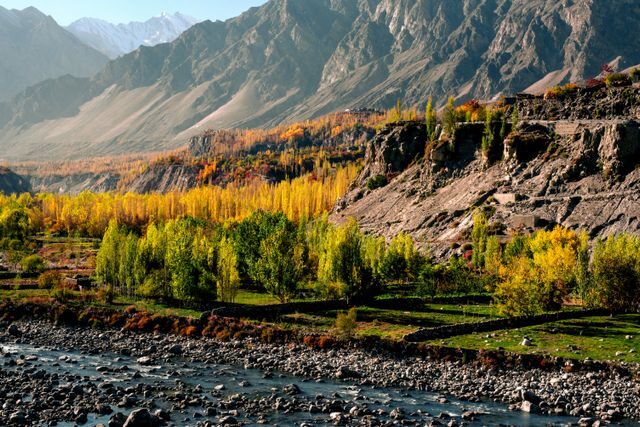
Hunza has two distinct seasons worth travelling for. Cherry and apricot blossom runs late March into mid-April, when the whole valley floor turns white and pink and the peaks are still under snow. Autumn, from the last week of September through late October, turns the poplars and apricot trees gold and is the most photographed time of year - it is also when rooms sell out first. Summer, May to August, is the most reliable for roads and weather and is when families travel. Winter is beautiful and very quiet, but Khunjerab closes and some hotels shut.
Where to stay and what it costs
Most travellers stay in Karimabad for the views over the valley, though Aliabad has more mid-range options and Gulmit or Passu suit people heading further north. Room rates swing hard with season: a good mid-range double that is affordable in June can double in the first two weeks of October. A six-day Hunza package from Rawalpindi typically covers hotel, breakfast and dinner, private transport, and a guide. We hold rooms directly with the properties, so what you see quoted is the rate we actually pay.
Food, language and everyday life
Hunza is predominantly Ismaili and Burushaski-speaking, with Wakhi spoken in Gojal further north, and literacy here is among the highest in Pakistan - you will find English widely understood. The food is worth going out of your way for: chapshoro, the meat-filled bread; harissa; walnut and apricot-kernel oil; buckwheat pancakes; and apricot everything, fresh in July and dried the rest of the year. Alcohol is not sold, shops close early, and the valley is unusually safe for solo and women travellers, which is one of the reasons it draws so many.
Frequently asked questions
Straight answers to what travellers ask us most.
How many days do I need for Hunza?+
When is the best time to visit Hunza?+
Do I need a permit for Hunza?+
Is the Karakoram Highway safe to drive?+
Let's plan your trip to the north
Send us your dates and group size. You'll have a clear itinerary and an honest quote before you commit to anything.